
WELCOME BONUS 300%
UP TO €2000 + 100
FREE SPINS
UP TO €2000 + 100
FREE SPINS
Home → Roulette
Roulette at Tikitaka
How Much Balance Covers 50 Rounds?
To cover 50 rounds of European Roulette with a €1 stake per round, a balance of €50 is required. The house edge for European Roulette is 2.70%, meaning that over a prolonged period, approximately 2.70% of all wagers are expected to be retained by the casino. This is calculated based on the presence of a single zero on the wheel.
In contrast, American Roulette, featuring both a single zero and a double zero, presents a higher house edge of 5.26%. Therefore, for 50 rounds with a €1 stake per round, a balance of €50 would theoretically be insufficient to cover potential losses at the same rate as European Roulette. The additional zero sector significantly increases the casino's advantage.
The difference in house edge between European Roulette (2.70%) and American Roulette (5.26%) directly impacts the required balance for sustained play. For 50 rounds at €1 per spin, American Roulette, due to its higher house edge, would necessitate a larger protective balance to mitigate risk compared to its European counterpart.
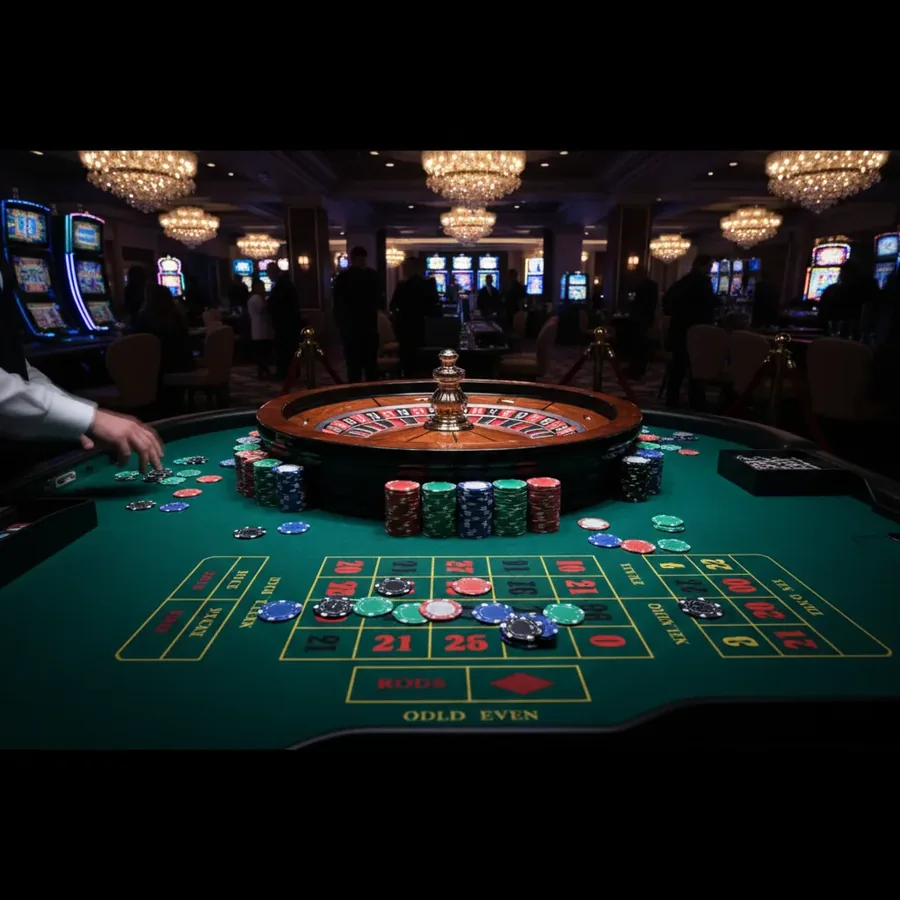
What Straight, Split, and Street Practically Mean
A Straight bet in Roulette involves wagering on a single number. This bet pays 35 to 1, meaning a €1 stake returns €36 if successful. On a European wheel with 37 sectors, the theoretical RTP is 97.30%, with a house edge of 2.70%. This bet offers the highest payout for an individual number.
A Split bet covers two adjacent numbers on the betting layout, paying 17 to 1. For instance, a €1 Split bet would return €18 if either of the two selected numbers hits. This bet also operates with the standard European Roulette RTP of 97.30% and house edge of 2.70%, offering a balance between payout and probability.
A Street bet covers a row of three numbers, paying 11 to 1. A €1 Street bet yields €12 if one of the three numbers is selected. Similar to Straight and Split bets on a European wheel, this wager maintains the 97.30% RTP and 2.70% house edge, providing a different risk-reward profile across a trio of numbers.
Corner 8:1 Covers Four Numbers
A Corner bet, also known as a Square bet, covers four numbers arranged in a square on the betting layout. This bet pays 8 to 1, so a €1 stake returns €9 upon a win. On a standard European Roulette wheel, this bet is subject to the 2.70% house edge and 97.30% RTP.
The structure of the Corner bet allows for coverage of four distinct numbers simultaneously, offering a wider potential winning area compared to Split or Straight bets. The payout ratio of 8:1 reflects this increased coverage across the 37 sectors of a European Roulette wheel.
When placing a Corner bet on a European Roulette table, the player is effectively covering 4 out of the 37 available numbers. The house edge remains constant at 2.70%, meaning that for every €100 wagered over the long term, €2.70 is expected to be retained by the casino.
Martingale Fails at Table Limit After 8 Losses
The Martingale betting system, which involves doubling the stake after each loss, can encounter its limitations rapidly when faced with table limits. After 8 consecutive losses on an even-money bet, starting with a €1 stake, the required bet would escalate to €256. This rapid increase in stake is a core feature of the system.
A European Roulette table with a €100 maximum bet limit would prevent further progression of the Martingale system after 8 losses. The required €256 stake exceeds the €100 limit, thus halting the doubling strategy. The house edge of 2.70% still applies to each individual bet placed.
The consequence of hitting the table limit after 8 losses is that the player cannot recoup previous losses by doubling their bet. This scenario highlights how mathematical progression systems, when confronted with practical table constraints and the inherent house edge, are prone to failure.
Place Chip Until Rien ne va plus
Placing a chip on the table until 'Rien ne va plus' is called by the dealer signifies the moment before the ball settles into a numbered pocket. In European Roulette, the ball spins on a wheel with 37 sectors, including a single zero. The payout for a Straight bet on a single number is 35 to 1.
The RTP for European Roulette stands at 97.30%, indicating a theoretical return to players over extended play. The house edge for European Roulette is 2.70%, stemming from the presence of the single zero. This edge applies to all bets, including those placed just before the dealer calls 'Rien ne va plus'.
For American Roulette, the wheel features 38 sectors, including a single and a double zero. This configuration results in a higher house edge of 5.26% and a lower RTP of 94.74%. Therefore, the statistical advantage for the casino is significantly greater on an American wheel compared to its European counterpart.
Roulette bet types at a glance
| Bet | Payout | Win Chance | Numbers Covered | House Edge |
|---|---|---|---|---|
| Roulette Französisch mit La Partage (gerade Chancen) | Rot/Schwarz 1:1 (bei 0 Rückerstattung 50%), Odd/Even 1:1, Low/High 1:1; Innere Einsätze ohne La Partage: Straight 35:1, Split 17:1, Street 11:1, Corner 8:1 | 98.65% | Bei 0 wird die Hälfte des Einsatzes auf gerade Chancen zurückerstattet (Rot/Schwarz, Pair/Impair, Manque/Passe). En Prison gibt denselben 1,35%. Regel gilt NUR für gleiche Einsätze | 1.35% |
| Roulette Europäisch (einfache Null, 37 Sektoren) | Straight 35:1, Split 17:1, Street 11:1, Corner 8:1, Six Line 5:1, Dozen 2:1, Column 2:1, Rot/Schwarz 1:1, Odd/Even 1:1, 1-18/19-36 1:1 | 97.30% | 37 Sektoren (1–36 + 0); Auszahlungen wie für 36 Sektoren – daher konstanter Edge auf ALLE Wetten | 2.70% |
| Roulette Französisch, innere Einsätze (La Partage gilt nicht) | Straight 35:1, Split 17:1, Street 11:1, Corner 8:1, Six Line 5:1, Dozen 2:1, Column 2:1 | 97.30% | Rad gleich (37 Sektoren), aber La Partage/En Prison gilt nicht für innere Einsätze – Edge bleibt europäisch | 2.70% |
| Roulette Amerikanisch – Five Number Bet (0, 00, 1, 2, 3) | Five Number 6:1 (deckt 5 von 38 Sektoren) | 92.11% | Einzige Wette am amerikanischen Rad mit Edge über 5,26% – „Fallenwette“. Kein Äquivalent am europäischen Rad | 7.89% |
| Roulette Amerikanisch (doppelte Null, 38 Sektoren) | Straight 35:1, Split 17:1, Street 11:1, Corner 8:1, Six Line 5:1, Dozen 2:1, Column 2:1, Rot/Schwarz 1:1 | 94.74% | 38 Sektoren (1–36 + 0 + 00); Auszahlungen wie beim europäischen Rad, aber der zusätzliche Sektor verdoppelt den Hausvorteil | 5.26% |
House Edge 2.70 Percent in One Number
Roulette Europäisch offers a standard house edge of 2.70 percent, calculated based on its 37 sectors. This edge applies consistently across all betting types on the European wheel. The payout structure, such as 35:1 for a straight bet, is designed around the 36 numbered pockets plus a single zero.
In contrast, Roulette Amerikanisch, with its additional double zero sector, presents a significantly higher house edge of 5.26 percent. This elevated edge stems from the increased number of pockets on the wheel, impacting all standard bets. For instance, a straight bet still pays 35:1 but covers one of 38 possible outcomes.
The Roulette Französisch variant, specifically when La Partage is applied to even-money bets, can reduce the effective house edge on those specific wagers to 1.35 percent. This rule, where half the stake is returned on an even-money bet when zero hits, provides a player advantage over standard European or American roulette. However, this benefit is exclusive to even-money bets.
How Much to Bet for 10 Percent Contribution?
To achieve a 10 percent contribution towards bonus wagering requirements, players must bet on table games, including various roulette variants. For example, a €10 bet on Roulette Europäisch would contribute €1 towards the total wagering requirement. This means a €2,000 welcome bonus would necessitate €20,000 in wagers on table games.
The total wagering requirement for a €2,000 bonus, assuming a 10 percent game contribution, stands at €20,000. If a player exclusively places bets on roulette games that contribute 10 percent, they would need to make a cumulative total of €20,000 in bets to fulfil the bonus conditions. This calculation excludes any contribution from free spins.
For a €2,000 welcome bonus, a player betting €10 per round on table games at a 10 percent contribution rate would need to complete 2,000 rounds of betting. This effectively translates to a significant volume of play required to unlock the full bonus amount. Players should verify the specific contribution rates for all game types.
Mobile Tables: Which Betting Fields Become Smaller
Mobile interfaces for live roulette tables, such as XXXtreme Lightning Roulette by Evolution, adapt the display to smaller screens. While the core betting options remain, the visual presentation of the betting layout is optimised. This ensures that key betting fields are accessible without excessive scrolling on devices like smartphones.
On mobile platforms, games like Mega Roulette from Pragmatic Play Live present a condensed yet functional interface. The betting fields for numbers, colours, and even-money options are arranged for intuitive touch interaction. The focus is on usability, ensuring that placing bets and observing game progress is seamless, despite screen size limitations.
Live Quantum Roulette by Playtech also features a mobile-optimised layout, where the betting fields are clearly delineated. While the layout might appear smaller than on a desktop, the clarity of the bet types, such as single numbers or odds/evens, is maintained. This allows for efficient bet placement and management during gameplay.
50 Euro Budget at a 1 Euro Table
With a €50 budget at a roulette table where the minimum bet is €1, a player can make a maximum of 50 individual bets. This limit is based on the total available funds divided by the smallest possible wager. Each €1 bet reduces the remaining budget by that amount, impacting the total number of rounds possible.
At a €1 minimum bet table, a €50 budget would theoretically allow for 50 rounds of play if every bet was a single €1 wager. However, this does not account for potential losses or strategic betting patterns. The duration of a session is directly proportional to the bet size relative to the total budget.
The number of potential betting opportunities with a €50 budget at a €1 table is 50. This figure represents the theoretical maximum number of times a player can place a €1 bet before their funds are depleted. It assumes no wins or losses, providing a baseline for session length calculations.
Session Limit 25 Euro and Fixed Number of Rounds
A session limit of €25 combined with a fixed number of rounds imposes a dual control on gameplay. If a player hits the €25 limit, their session concludes regardless of the rounds played. This prevents exceeding the predetermined financial boundary within a single play session.
When a session is also capped by a fixed number of rounds, such as 100, the game concludes either when the round limit is reached or when the €25 session limit is met. These limits work in tandem to manage player expenditure and playtime effectively. The first condition met terminates the session.
The combination of a €25 session limit and a fixed round count of 100 means that a player will stop playing if they either lose €25 or complete 100 rounds, whichever occurs first. This structured approach to gameplay aims to promote responsible gambling by defining clear end-points for each session.
RTP vs. House Edge: Same Number Differently
European Roulette operates with an RTP of 97.30%, resulting in a consistent house edge of 2.70% across all betting types, including a Straight bet yielding 35:1. This means for every 100 units wagered, a theoretical return of 97.30 units is expected over the long term. The fixed payouts for all wagers on a 37-sector wheel ensure this predictable advantage for the house. Players should understand that this edge applies equally to inside and outside bets.
American Roulette, by contrast, features an RTP of 94.74% with a house edge of 5.26% due to its 38 sectors, which include both a '0' and a '00'. While the payout for a Straight bet remains 35:1, the additional zero sector significantly increases the house's advantage. This difference is substantial, meaning players face a nearly double disadvantage compared to European Roulette. The inclusion of the '00' sector directly impacts the probability of winning.
The Five Number Bet at the American Roulette table presents the highest house edge at 7.89%, with an RTP of 92.11%, covering sectors 0, 00, 1, 2, and 3. This specific wager, often termed the 'basket bet', offers a payout of 6:1 but covers only 5 out of 38 sectors. Players seeking to minimise the house advantage should avoid this particular bet, as its mathematical predisposition is significantly less favourable than other standard wagers. This bet has no direct equivalent on European wheels.
How Much Budget Withstands 2.70 Percent House Edge
A budget of €100 facing a 2.70% house edge on European Roulette will theoretically see a loss of €2.70 per 100 units wagered over an extended period. This edge is consistent across all standard bets, such as Straight (35:1) or Red/Black (1:1). Understanding this theoretical depletion is crucial for setting realistic expectations for extended play sessions. The house advantage is a fundamental aspect of the game's design.
To maintain a session's budget for a reasonable duration, a player might consider the theoretical loss rate across a significant number of spins. For example, wagering €10 per spin on European Roulette with a 2.70% house edge means an average loss of €0.27 per spin. Over 100 spins, this approximates a €27 loss, demonstrating how the house edge gradually impacts the player's bankroll. This highlights the importance of stake management.
When considering the €2,000 welcome bonus, which has a 10% contribution from table games, the impact of the house edge becomes more pronounced in relation to wagering requirements. A €2,000 bonus at 10% table game contribution would require €20,000 in wagers from table games to be cleared. Facing a 2.70% house edge, this would theoretically result in a loss of €540 during the wagering process. Players should factor this into their bonus strategy.
Error: Using Opposite Bets for Wagering Fulfillment
Wagering requirements for bonuses at Tikitaka casinos may present challenges if players attempt to fulfill them using opposite bets, particularly on roulette. While a bet on Red and Black simultaneously covers all outcomes on a European wheel (37 sectors), this strategy does not mitigate the house edge effectively. The 2.70% house edge persists on each individual bet placed, regardless of covering opposing outcomes. This approach does not generate a risk-free wagering path.
For instance, placing €10 on Red and €10 on Black on a European Roulette wheel would result in a net stake of €20. If Red hits, the player wins €10 (net profit €10), but if Black hits, they also win €10 (net profit €10). However, if the '0' (37th sector) appears, both bets lose, resulting in a €20 loss. This scenario demonstrates that covering all sectors does not eliminate the house's advantage.
The French Roulette variant with the La Partage rule offers a partial refund of 50% on even-chance bets (like Red/Black, Odd/Even, Low/High) when the ball lands on '0'. This rule reduces the house edge on these specific bets to 1.35%, making it a more favourable option for players aiming to fulfil wagering requirements. However, this rule applies only to even-chance bets and not to inside bets, which retain the standard 2.70% edge.
Lightning Roulette vs Classic Wheel: RTP Difference
XXXtreme Lightning Roulette, a live variant from Evolution, maintains an RTP of 97.30%, identical to that of a standard European Roulette wheel. Despite its enhanced features, including potential multipliers up to 2,000x on straight bets via Chain Lightning and Double Strike, the fundamental return to player percentage remains consistent. This means that, theoretically, over millions of spins, the payout ratio is the same as a classic European game.
Mega Roulette by Pragmatic Play Live also offers an RTP of 97.30%, aligning with the European standard. This game introduces multipliers on up to five 'Mega Numbers' per round, with multipliers ranging from 50x to 500x on straight bets, which pay 29:1. While the potential for significantly larger single-win payouts exists, the long-term theoretical return for the player is preserved at 97.30%. The core game mechanics adhere to established RTP benchmarks.
Quantum Roulette Live from Playtech similarly operates with an RTP of 97.30% on its 37-sector wheel. This variant incorporates Quantum multipliers that can boost payouts on 1 to 5 numbers up to 500x. The inclusion of these dynamic multiplier features does not alter the underlying mathematical structure that dictates the game's RTP. Players engaging with these enhanced roulette titles can expect the same theoretical long-term return as traditional European Roulette.
Which Bets Count Towards 10 Percent?
When engaging with bonus wagering requirements at Tikitaka casinos, it is specified that table games contribute 10% towards the turnover. This means that for every €100 wagered on a table game, only €10 will count towards fulfilling the bonus conditions. This contribution rate applies broadly to the category of table games offered on the platform. Players should be aware that this percentage significantly extends the time and amount needed to clear bonuses.
Specifically within the roulette selection, all standard bets on European Roulette, including Straight (35:1), Split (17:1), Street (11:1), Corner (8:1), Six Line (5:1), Dozen (2:1), Column (2:1), and even-money bets (1:1), contribute to this 10% wagering fulfillment. The house edge of 2.70% on the European wheel does not exempt any of these bets from the restricted contribution rate. Therefore, the wagering requirement will be met at a slower pace compared to games with higher contributions.
Live roulette titles such as XXXtreme Lightning Roulette, Mega Roulette, and Quantum Roulette Live also fall under the 10% contribution rule for bonus wagering. Despite their enhanced features and multiplier capabilities, these games are subject to the same general terms as other table games. Players utilizing these live dealer options for bonus wagering will experience the same 10% calculation applied to their bets. The 35:1 payout for straight bets on these games does not alter their contribution percentage.
Contact
Live - online chat
Banking









Providers












TikiTaka Casino 2026